Web Fundamentals/DNS & Domains
What Is a Domain Name?
A domain name is the human-friendly address you type to reach a website. Learn what it really is, why we use names instead of numbers, and the parts that make it up.
Sep 15, 20267 min read
How names become addresses — domains, DNS, URLs, IP addresses, and nameservers.
A domain name is the human-friendly address you type to reach a website. Learn what it really is, why we use names instead of numbers, and the parts that make it up.
DNS turns a domain name like example.com into the IP address of a server, so your browser knows where to send its request. Here is what DNS is and why it exists, in plain language.
Follow a domain name from the moment you press Enter to the IP address that comes back. We trace every cache and server in the DNS lookup chain, step by step, in plain language.
A beginner-friendly tour of the most common DNS record types and what each one does, with a quick-reference table and plain-language examples you can actually follow.
Break a URL into its parts: scheme, host, port, path, query, and fragment. A beginner-friendly tour of what every piece of a web link actually does.
A plain-language guide to IP addresses for beginners: what they are, how IPv4 and IPv6 differ, public vs private IPs, and how DNS connects names to numbers.
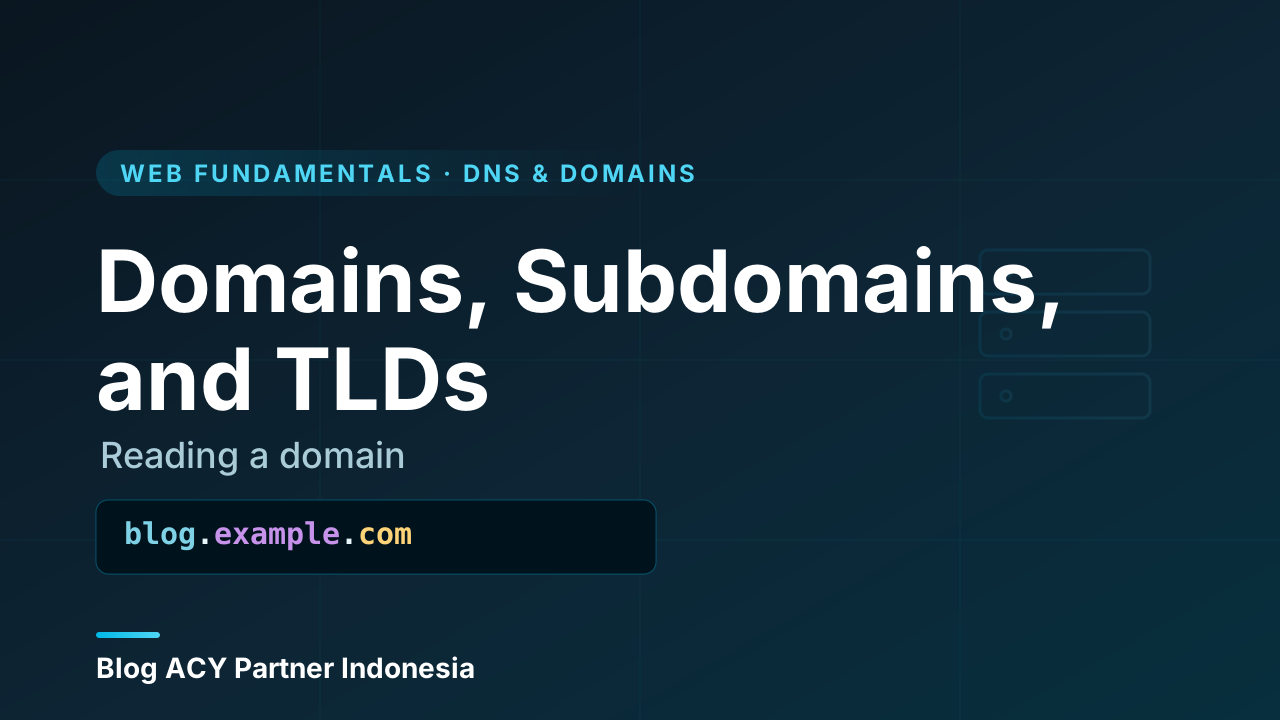
Learn how to read a web address from right to left: what a TLD is, what the registrable domain is, and how subdomains let you split one site into many. Beginner-friendly and conceptual.
A beginner-friendly guide to registering a domain: who the registrars and registries are, what ICANN does, why you rent a name yearly, and how DNS points it at your site.
What nameservers actually do, why your domain points at them, and how the registrar, nameserver, and DNS records all fit together — in plain language for beginners.
You changed a DNS record but the old site still loads for some people. Here is why DNS changes are not instant, what propagation really means, and how TTL controls the wait.